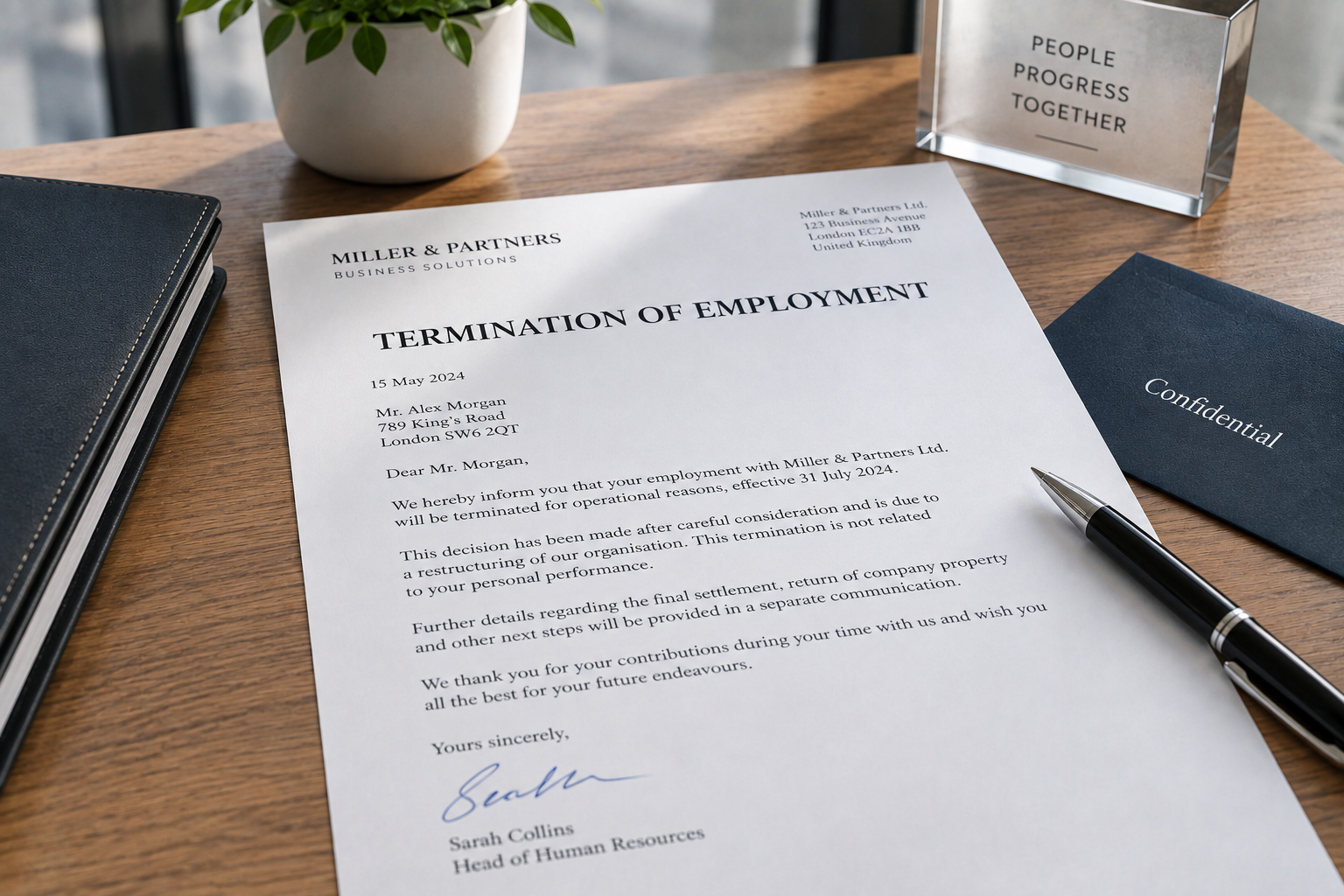
A termination of an employment contract is a major event for many employees. Numerous questions often arise immediately: Is the termination legally valid? Do I have to accept it? Am I entitled to a severance payment?
It is important to know that not every termination by an employer is automatically lawful. There are often good opportunities to challenge a termination or achieve a better outcome.
As a lawyer in Freiburg, I review your termination, explain your legal options, and assist you in enforcing your rights against your employer.
What Should I Do If I Have Received Notice of Termination?
After receiving notice of termination, you should remain calm – but act quickly. Employment law is subject to short deadlines.
If you wish to challenge a termination, an unfair dismissal claim must generally be filed with the employment court within three weeks of receiving the notice of termination .
If this deadline is missed, the termination will in many cases be deemed legally effective – even if there were originally good grounds for challenging it.
An early legal review can therefore be crucial.
Is My Termination Legally Valid?
A termination must meet various legal requirements. Employers have to comply with numerous rules.
A termination may, for example, be invalid if:
- there is no sufficient legal reason for the termination
- the applicable notice period has not been observed
- the social selection process was carried out incorrectly
- special protection against dismissal was not taken into account
- the works council was not properly involved
- formal requirements were not met
Whether a termination is legally valid always depends on the circumstances of the individual case.
What Types of Termination Are There?
In the case of an ordentliche Kündigung und einer ordinary termination with notice, unterschieden.
Ordentliche Kündigung
A termination without notice requires a so-called ordinary termination with notice, and termination without notice.
The statutory notice periods are set out in Section 622 of the German Civil Code (BGB). For employers, the notice period generally increases depending on how long the employment relationship has existed.
Ob eine ordentliche Kündigung wirksam ist, hängt jedoch nicht nur von der Einhaltung der Frist ab. Insbesondere bei Anwendung des Kündigungsschutzgesetzes benötigt der Arbeitgeber einen rechtlich anerkannten Kündigungsgrund.
Termination Without Notice
A termination without notice requires a so-called ordinary termination with notice, the employment relationship ends without observing a notice period. Because this can have particularly serious consequences for employees, strict legal requirements apply.
A termination without notice requires a so-called important reason pursuant to Section 626 BGB. There must be serious circumstances that make it unreasonable for the employer to continue the employment relationship even until the expiry of the ordinary notice period.
In addition, a termination without notice must be issued within two weeks after the employer becomes aware of the relevant circumstances.
Particularly in cases of termination without notice, a legal review is often worthwhile, as employers do not always meet these strict requirements.
There are different forms of termination in employment law. The decisive factor is the reason why the employer wishes to end the employment relationship.
Grounds for Termination: Redundancy, Conduct-Related or Personal Reasons?
If an employment relationship falls within the scope of the German Protection Against Dismissal Act, the employer’s mere wish to end the employment relationship is generally not sufficient. Instead, the employer must have a legally recognised reason for the termination.
Employment law distinguishes in particular between three categories of grounds for termination: redundancy, conduct-related dismissal and dismissal for personal reasons..
Each of these forms of dismissal is subject to specific requirements. Whether those requirements are actually met and whether the termination is legally valid should always be carefully examined on a case-by-case basis.
Redundancy
A redundancy occurs when the employer wishes to eliminate a position for operational reasons – for example, because of restructuring or economic changes.
Here too, the employer must meet specific legal requirements. Not every business decision automatically justifies a termination.
Conduct-Related Dismissal
A condct-related dismissal is based on alleged misconduct by the employee.
In many cases, the employer must first have issued a valid warning before terminating the employment relationship on this basis. Whether the allegations are actually sufficient to justify dismissal should be reviewed carefully.
Dismissal for Personal Reasons
A dismissal for personal reasons occurs where the reason for termination relates to circumstances concerning the employee personally. The most common example is dismissal due to illness.
Strict legal requirements also apply in these cases.
Am I Entitled to Severance Pay After a Termination?
Many employees ask themselves after receiving notice of termination: Will I receive a severance payment?
In many cases, there is no automatic entitlement to severance pay. Nevertheless, severance payments are frequently agreed following a termination – particularly in connection with an unfair dismissal claim or a settlement.
The chances of receiving a severance package depend largely on how strong the prospects are of successfully challenging the termination. The greater the risk to the employer that the termination is invalid, the stronger the employee’s negotiating position may be.
Should I file a lawsuit for unfair dismissal?
A Lawsuit for Protection Against Unfair Dismissal is the primary means of challenging a termination.
In such cases, the court determines whether the employment relationship was validly terminated. Often, an unfair dismissal proceeding concludes with an agreement between the employee and the employer—for example, regarding a severance payment, a favorable employment reference, or other entitlements.
Whether filing a lawsuit is advisable should be assessed as early as possible.
If you have received a notice of termination, you should be aware of your rights before taking any further action.
I will review the following for you:
✓ Is the termination lawful?
✓ Was the notice period observed?
✓ Is there a chance of receiving a severance payment?
✓ Is it worth filing a lawsuit for unfair dismissal?
✓ What entitlements exist after termination?