A termination of employment is initially a shock for many employees. Alongside the question of whether the termination is legally valid at all, one issue often takes centre stage: Am I entitled to a severance payment?
What is a severance payment?
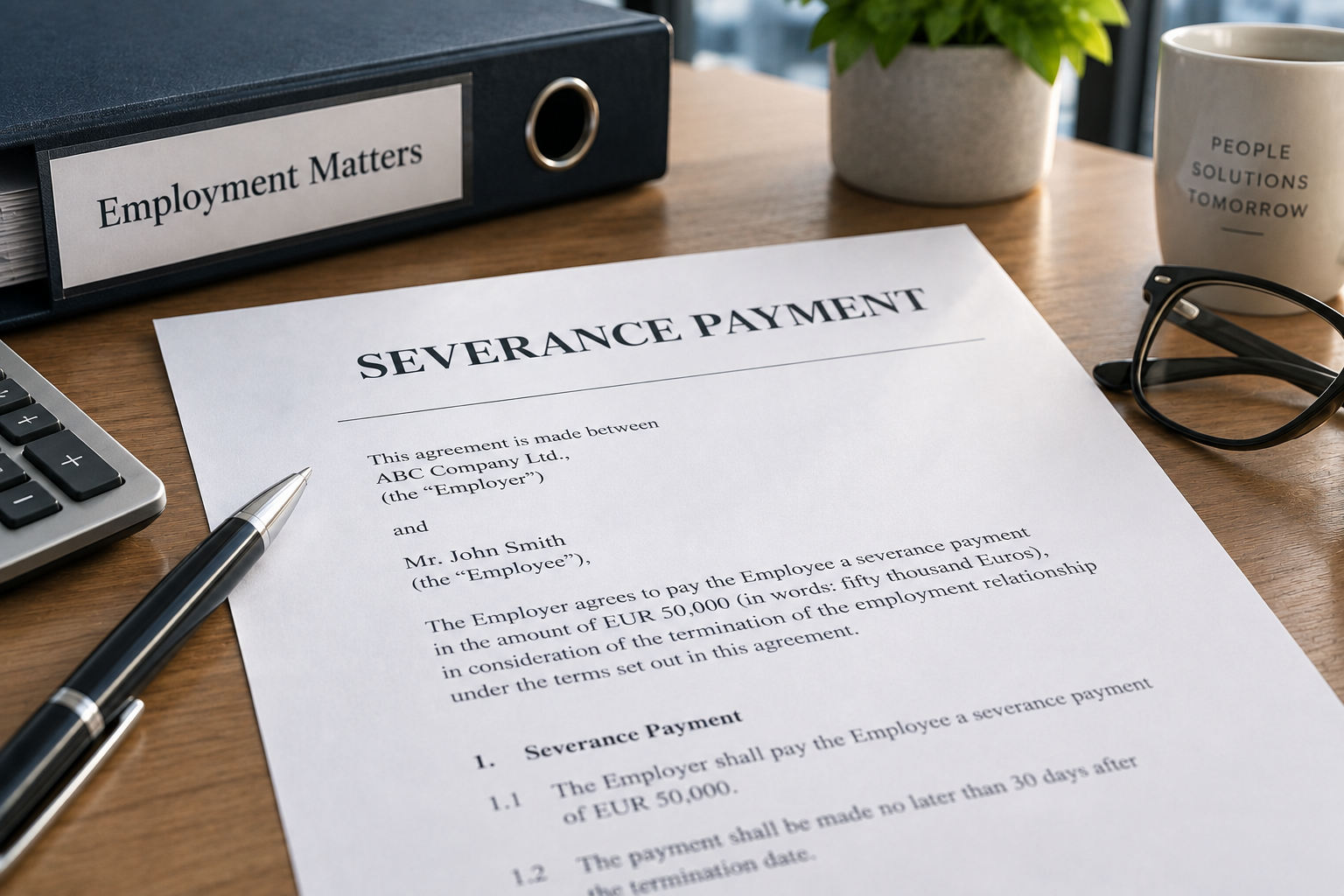
A Severance Payment is a one-off payment made by the employer to the employee. It is generally paid as compensation for the termination of the employment relationship and the resulting loss of the employee’s job.
Many employees assume that every termination automatically gives rise to an entitlement to severance pay. However, this is not the case. In many situations, the opportunity to obtain a severance payment only arises through effective negotiation – for example, in connection with an unfair dismissal claim, a court settlement, or a termination agreement.
When can I receive a severance payment?
A severance payment may be considered in particular in cases involving:
- termination by the employer
- redundancy
- a termination agreement
- a settlement before the employment court
- negotiations concerning the termination of the employment relationship
Whether a severance payment can be obtained, and in what amount, always depends on the individual circumstances. Relevant factors include the length of employment, salary, the prospects of success of an unfair dismissal claim, and the employee’s negotiating position vis-à-vis the employer.
How much severance pay can I receive?
A commonly used guideline is the so-called standard severance formula:
0.5 times the gross monthly salary for each year of employment.
However, this is not a fixed statutory rule. Depending on the circumstances, the actual severance payment may be lower, but it may also be significantly higher. In particular, where there are doubts about the legal validity of a termination, the chances of negotiating a higher payment often improve.
What deductions apply to severance pay? Tax and social security
Many employees ask: How much of my severance payment will I actually receive after deductions? How much of my severance payment will I actually receive after deductions not subject to social security contributions. This means that, as a rule, no contributions are deducted for health insurance, long-term care insurance, pension insurance, or unemployment insurance.
However, severance payments are subject to tax For tax purposes, they are treated as income and are subject to income tax. Since a large one-off payment can increase the tax burden, preferential tax treatment under the so-called one-fifth rule may apply under certain conditions. This can reduce the overall tax burden.
The actual deductions from a severance payment depend on the individual case – in particular on the amount of the severance payment, other income, and the employee’s personal tax circumstances.
For this reason, the amount that will actually be paid out should always be considered alongside the gross amount of the severance payment. A good negotiation strategy takes into account not only the gross severance figure, but also the overall financial benefit to the employee.