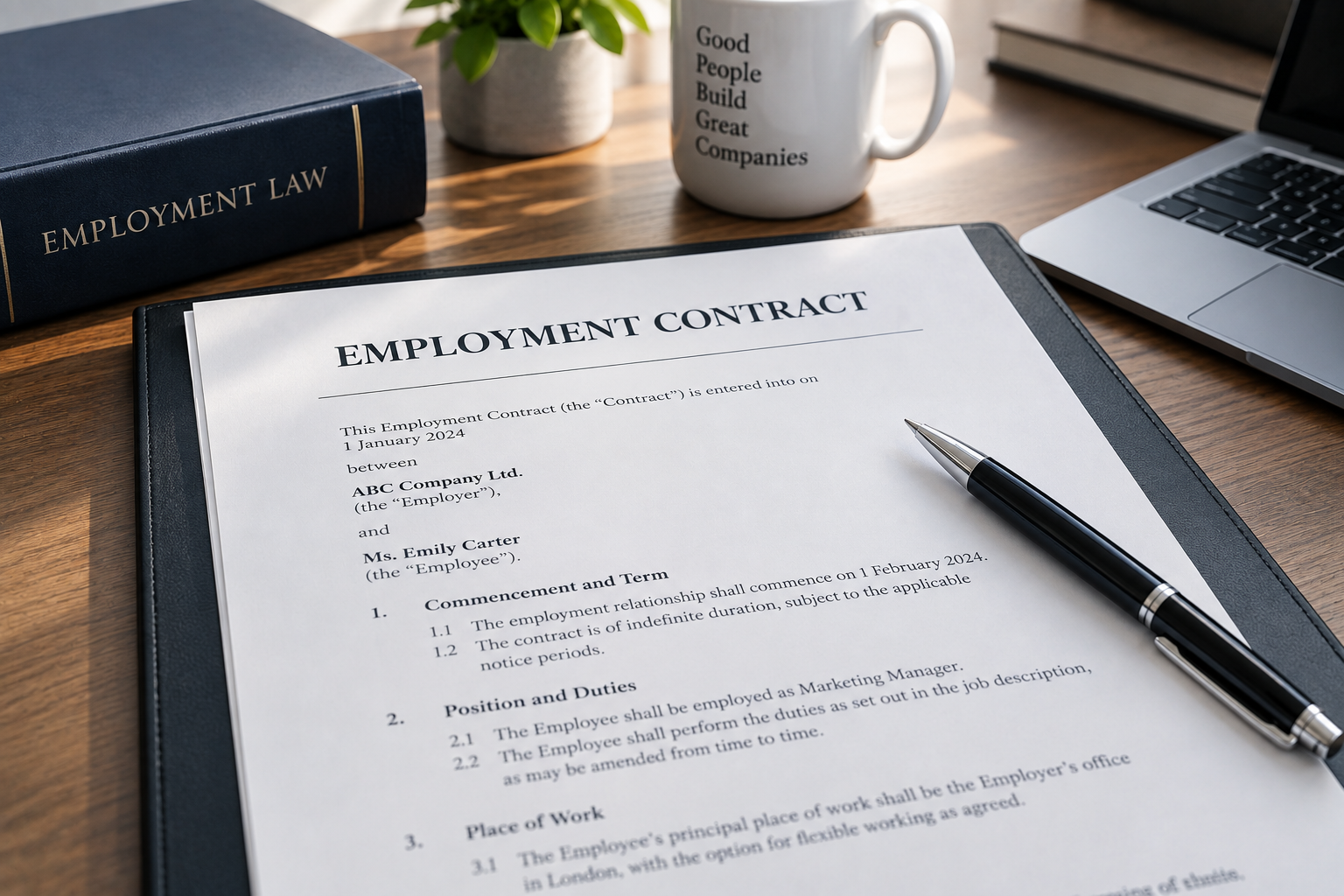
The Employment Contract forms the basis of every employment relationship. It sets out the key rights and obligations between employee and employer – from the employee’s duties and remuneration to vacation entitlement, working hours and notice periods.
Many employees sign their employment contract without carefully reviewing the individual provisions. Unclear or disadvantageous clauses often only become apparent later – for example, when disputes arise over overtime, salary, vacation entitlement or the termination of the employment relationship.
What is an Employment Contract?
A Employment Contract is an agreement between an employee and an employer that establishes an employment relationship. The employee agrees to perform the agreed work, while the employer is obliged, in particular, to pay the agreed remuneration.
In addition to salary, an employment contract contains numerous other provisions that may be important for the employment relationship.
These include in particular:
- commencement and duration of employment
- job description and area of responsibility
- working hours and overtime
- remuneration, bonuses and additional payments
- vacation entitlement
- probationary period
- notice periods
- confidentiality provisions
- non-compete clauses
- provisions regarding working from home or remote working
Especially in the case of more extensive contracts, a careful review can help prevent disadvantages from arising later.
Should I Have My Employment Contract Reviewed Before Signing?
Starting a new job is often a positive step. Nevertheless, an employment contract should not be signed without careful review.
Not every clause contained in an employment contract is automatically legally valid. Some provisions may be unclear, unenforceable or disadvantageous to employees.
Having your employment contract reviewed can help clarify important questions at an early stage:
✓ Does the remuneration correspond to what was agreed?
✓ Are the overtime provisions legally valid?
✓ What notice periods apply?
✓ Are there any problematic restrictions?
✓ What rights do I have regarding illness, vacation or working from home?
Knowing your rights can put you in a better position to negotiate before signing. Alternatively, you may choose to keep this knowledge to yourself and rely on it later if necessary.
Common Problems in Employment Contracts
Many employment law disputes arise because contractual provisions are interpreted differently.
Typical areas of conflict include:
- unpaid overtime
- flexible working hours
- variable remuneration or bonus payments
- repayment clauses
- transfers to other workplaces
- fixed-term employment
- post-contractual non-compete clauses
Whether a particular clause is legally valid always depends on its specific wording and the circumstances of the individual case.
Reviewing an Employment Contract During an Existing Employment Relationship
Even if an employment contract has already been signed, a legal review may still be worthwhile.
This applies in particular if:
- your employer requests changes to the contract
- you are presented with a new employment contract
- a promotion or transfer is planned
- a dispute arises over individual contractual terms
- you are offered a termination agreement
You do not have to accept changes to your employment contract without first having them reviewed.
A clear and fair employment contract provides certainty. A legal review can help identify risks at an early stage and prevent future disputes.
I will review the following for you:
✓ Are the provisions in the employment contract legally valid?
✓ Are there any disadvantageous or unusual clauses?
✓ What rights and obligations arise from the contract?
✓ Are there opportunities for renegotiation?
As a lawyer, I assist employees with the review of employment contracts and with all legal questions relating to their employment relationship.